
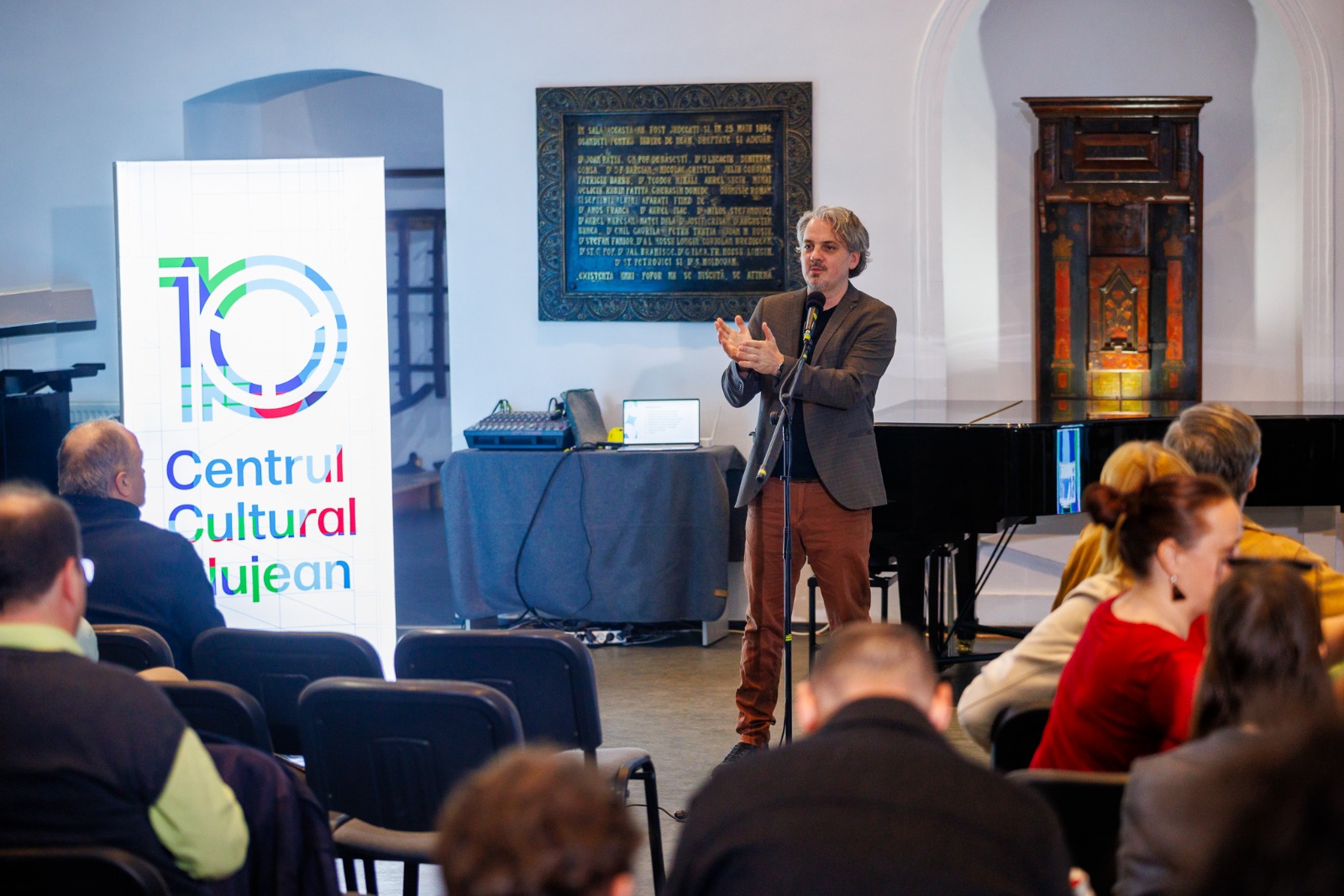
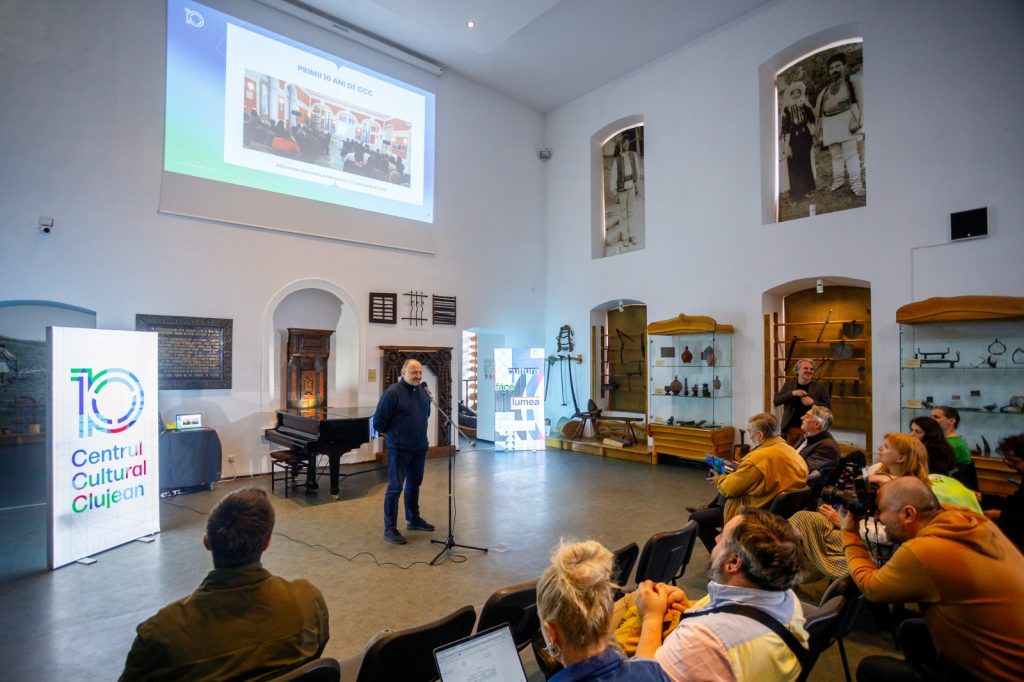
On Thursday, April 16, 2026, the Ethnographic Museum of Transylvania in Cluj-Napoca hosted the General Assembly of the Cluj Cultural Center (CCC) members. The meeting brought together representatives from the cultural, academic, and administrative sectors to mark a symbolic milestone: the organization’s 10th anniversary.
The event was opened by Tudor Sălăgean, Manager of the Ethnographic Museum and member of the CCC Board of Directors, who reflected on the key milestones since the organization’s inception. A major theme for community reflection emerged during the discussions: the possibility of a new bid by Cluj-Napoca to hold the title of European Capital of Culture in 2035.
Recent achievements
During the General Assembly, member organizations approved the 2025 Activity Report, which details 317 cultural and professional events, collaborations with 2,262 artists and professionals, and a direct impact on 9,366 beneficiaries—over 5,700 of whom were children and youth.
In 2025, the Cluj Cultural Center maintained a significant international presence through leadership roles in major European networks (such as Culture Action Europe, Culture Next, and Culture and Health) and partnerships with 65 institutions. A notable achievement was the acquisition of UNESCO NGO Observer status on behalf of Romania.
The CCC also demonstrated the financial multiplier effect of culture in practice, successfully attracting €3 from European and private sources for every €1 invested by local authorities. Of the total €1.37 million spent within the city, 20% was directly redistributed to local artists and organizations.
Current status and 2026 outlook
● The Assembly approved the operational plans for the current year and the membership applications of five new organizations: Asociația De Auzit (radio drama), Asociația Uzinaduzina (interdisciplinary arts), Asociația Culturi în dialog (Annie Klaus Gallery), Asociația Mise en scène (educational theatre), and Asociația Vizibil (art for vulnerable groups). The Board of Directors was also updated, currently including Daniel David, Rector of Babeș-Bolyai University (UBB), and Emil Boc, Mayor of Cluj-Napoca.
● Regarding finances, while the projected 2026 budget is approximately €1.39 million, the organization faces significant financial challenges. Consequently, a plan to reduce salary and administrative costs was adopted to ensure operational stability and to prioritize investment in the local cultural sector, where the CCC annually redistributes a substantial portion of its resources.
● Executive Director Ștefan Teișanu announced the transfer of the Remarkable Romania project to the “Collective Memory Point” Association and the QUB Science and Art Center to the Scientifica Association. This transition allows these projects to thrive under dedicated management, while the CCC focuses its internal resources on advocacy and sector development.
Future strategic directions and statutory reform
Over its ten-year existence, the CCC has attracted more than €10.5 million into the city from European and private funds, demonstrating a 4.5x multiplier effect on local public investment. Approximately 25% of these funds were redistributed into the local creative ecosystem, and over €2 million were invested in cultural infrastructure (such as the Future of Work labs at CREIC, the Contemporar Gallery at UBB, and the Qub Center).
As the organization enters a new stage of development, members unanimously agreed on the need for a statutory reform to better address future challenges and the city’s new strategic objectives. A dedicated working group has been established to revise the CCC statute, with a new General Assembly scheduled for December to approve these substantive changes.
The Assembly also initiated a strategic debate regarding the next decade of culture in Cluj, including exploring a potential bid for the title of European Capital of Culture 2035.
“2026 is a year of reflection on what we have built and how we can increase the city’s cultural ambition for the next ten years,” concluded Executive Director Ștefan Teișanu.
The Cluj Cultural Center is a non-governmental organization comprising 146 members from the cultural sector, academia, civil society, and public administration. The Center is supported by the Cluj-Napoca City Hall, the Cluj County Council, the Ministry of Culture, the European Commission, and private partners, including Banca Transilvania, Rivus, and others.
For further information and full reports, please visit the official website: www.cccluj.ro.

