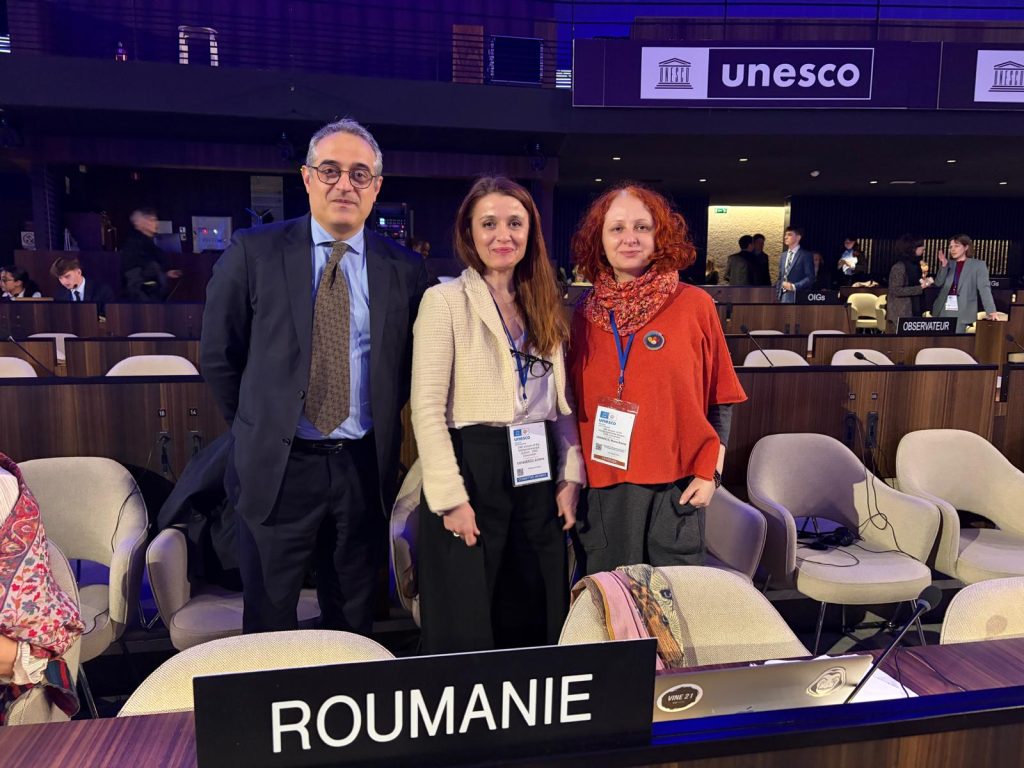
The Cluj Cultural Centre (CCC) has officially been granted UNESCO observer status, a role held by only a select number of civil society organizations worldwide. This status allows the CCC to participate in the Conferences of Parties and intergovernmental committees of UNESCO Conventions, contributing field-based expertise and grassroots perspectives to the discussions held by UNESCO member states.
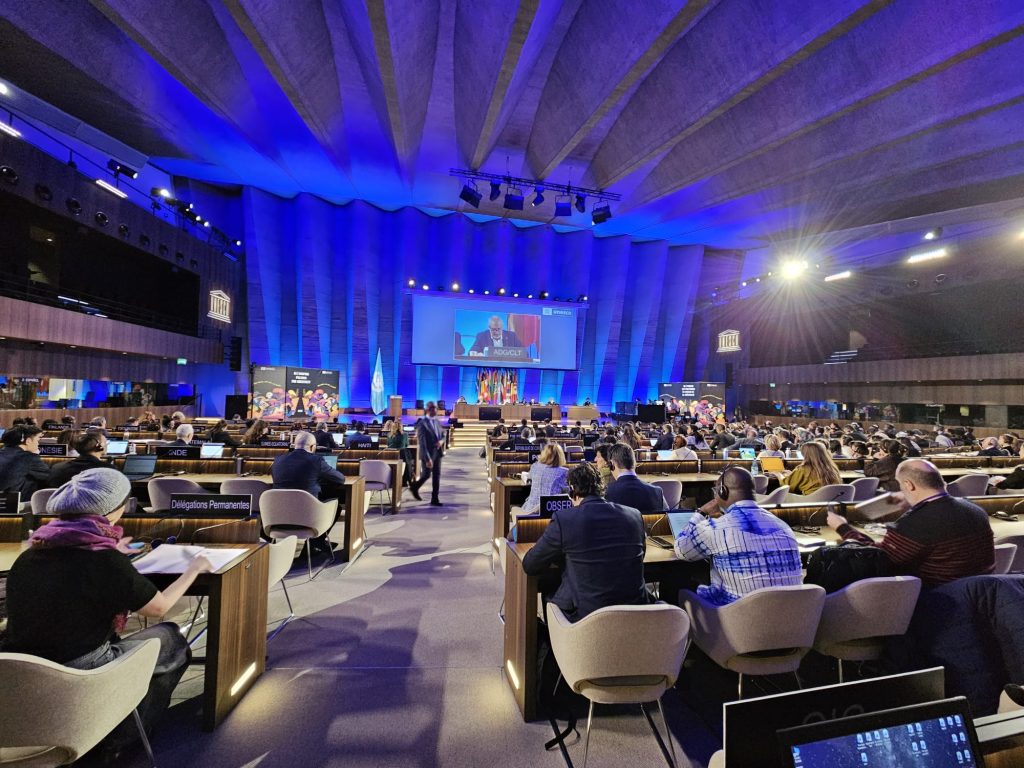
Rarița Zbranca, Program Director at the CCC, is currently attending the 19th session of the Intergovernmental Committee for the Protection and Promotion of the Diversity of Cultural Expressions. During this session, member states are establishing work plans for the coming years and evaluating progress on UNESCO recommendations regarding the digital environment, including the growing impact of artificial intelligence on the creative industries.
In an era where the cultural sector is buffeted by economic instability and rapid technological transformation, the role of observer organizations is vital. They bring real-world challenges to the forefront, advocating for the needs of creators and independent organizations while highlighting risks to cultural diversity.
The “Re|Shaping Policies for Creativity” Report
The session also featured the launch of the latest “Re|Shaping Policies for Creativity” report, one of the world’s most significant analyses of the policies shaping the cultural and creative sectors. Key findings from the report include:
- Underfunding: Although most countries have established public institutions with dedicated cultural mandates, public funding remains low, often representing less than 0.6% of GDP. Furthermore, culture remains a marginal priority in international development, receiving only 0.15% of total development aid.
- The Digital Paradox: Digital transformation has fundamentally changed the creative landscape, with roughly 35% of creators’ income now coming from digital content. However, fair remuneration and job stability remain difficult to achieve.
- The AI Gap: While 85% of countries claim to have a digital cultural strategy, the report highlights a major gap: culture is almost entirely absent from conversations regarding AI regulation. Out of 148 policy documents on the use of AI, only one makes any reference to culture.
- Civil Society Under Pressure: The report raises an alarm regarding the declining involvement of civil society in cultural governance, a reduction in funding for independent organizations, and increasing restrictions on their rights.
These challenges underscore the urgent need for collaborative global governance and robust policies capable of sustaining cultural diversity in a changing world.